Introduction
If you are looking into All-on-4 dental implants, you are probably feeling a mix of excitement and hesitation. The idea of waking up with a full set of fixed, permanent teeth is life-changing, but then you start Googling the price.
It is common to see one website quote $15,000 and another quote $50,000. It’s confusing, and quite frankly, it’s frustrating when you just want a straight answer.
In this guide, we are going to look beyond the marketing numbers. We’ll break down exactly what you are paying for, why the prices vary so drastically between clinics, and how to figure out a realistic budget for your specific situation.
First, What Actually Are All-on-4 Implants?
Before talking money, it helps to understand what you are buying.
In the past, if you needed to replace a full upper or lower jaw of teeth, you needed 8 to 10 individual implants. That required a lot of surgery and a lot of bone grafting.
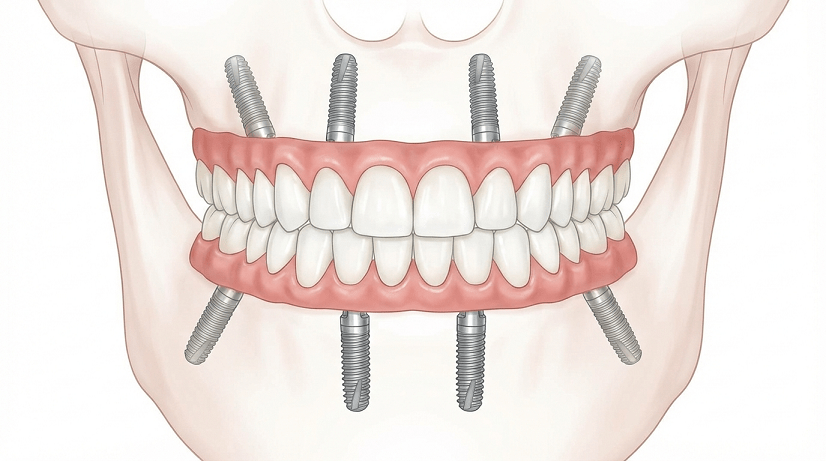
The All-on-4 technique is a smarter engineering solution. It uses just four high-strength implants per jaw. Two of them are placed straight in the front, and two are angled in the back. This "truss-like" structure provides immense support, often without needing expensive bone grafts.
The result? A permanent bridge of teeth that doesn't come out, doesn't cover the roof of your mouth, and feels like your own teeth.
The Big Question: How Much Do They Cost?
In the United States, the cost for All-on-4 implants is substantial because it is a complex medical procedure involving surgery, anesthesia, and custom prosthetics.
Here are the realistic averages you can expect in 2026:
1. Cost Per Arch (One Jaw)
If you need just your upper or lower teeth replaced:
- $15,000 – $22,000 for standard acrylic options.
- $25,000 – $30,000+ for premium zirconia options.
2. Cost for Full Mouth (Both Jaws)
If you are replacing all your teeth at once, clinics often offer a slightly discounted "package" rate:
- $35,000 – $45,000 for standard acrylic.
- $45,000 – $60,000+ for premium zirconia.
💡 A Note on Low Prices: You might see ads for "Implants starting at $9,999." Be very careful. These often only cover the surgery phase (placing the screws) but exclude the cost of the actual teeth, anesthesia, or follow-up care. Always ask for the "all-inclusive" price.
Why Is There Such a Big Price Difference?
The price tag usually reflects four main variables:
1. The Material of Your New Teeth
This is the biggest cost driver. You generally have two choices for your final bridge:
- Acrylic (The Standard Option): This is a titanium bar wrapped in pink acrylic with plastic teeth. It looks great and is less expensive, but over time (5-10 years), the teeth can wear down or stain and may need replacing.
- Zirconia (The "Forever" Option): Zirconia is a ceramic that is incredibly strong—almost as hard as diamond. It doesn't chip, stain, or wear down. Because it is much harder to manufacture, it usually adds $5,000–$6,000 to the cost per arch, but it lasts much longer.
2. Your Bone Health
The base price assumes you have enough bone to hold the implants. If you have been missing teeth for a long time, you might have experienced bone loss.
- Bone Smoothing/Grafting: If your jaw needs to be leveled or built up, this can add $1,000–$3,000 to the bill.
- Extractions: If you still have failing teeth that need to be pulled, most surgeons charge per tooth.
3. The Specialist’s Experience
You are paying for the hands that perform the surgery.
- General Dentists who do implants occasionally may charge less.
- Board-Certified Oral Surgeons or Prosthodontists typically charge more. However, their expertise is often worth the premium to avoid complications like nerve damage or implant failure.
4. Location
It’s simple economics: rent and labor cost more in big cities. A clinic in downtown Manhattan or San Francisco will almost always be 20-30% more expensive than a clinic in Utah or Arizona for the exact same quality of work.
Is It Worth the Investment?
Making a decision this big isn't just about math; it's about quality of life. Compared to traditional dentures:
- Bite Force: Dentures give you about 20% of your natural chewing power. All-on-4s give you about 90%.
- Bone Preservation: Implants stimulate the jawbone, preventing the "collapsed" face look associated with bone loss.
- Taste: Unlike upper dentures, All-on-4s leave your palate open, so food tastes like it should.
How to Get a Clear Estimate
You don't want a generic guess; you want to know what it will cost you. We have built a simple tool to help you get a better idea of your potential costs without the pressure of a sales call.
Why Use Evaluation?
- Personalized: Get a tailored range based on your situation, not internet averages.
- Photo-Based: Upload photos for a more accurate assessment of your needs.
- Compare Options: Understand the difference between single implants, All-on-4, and full-mouth restorations.
- Save Money: Receive practical strategies to lower costs without sacrificing safety.