Stop Guessing. Start Planning. Know Your True Implant Cost
Simply upload your dental photos. Our professionals will quickly review your mouth and teeth to create a detailed report suggesting multiple implant options and tailored cost ranges. Get fast, accurate clarity, all from the comfort of your home.
Takes 3 minutes · Expert analysis · Personalised to your case

Your Personalized Implant Plan Delivers Four Essential Benefits
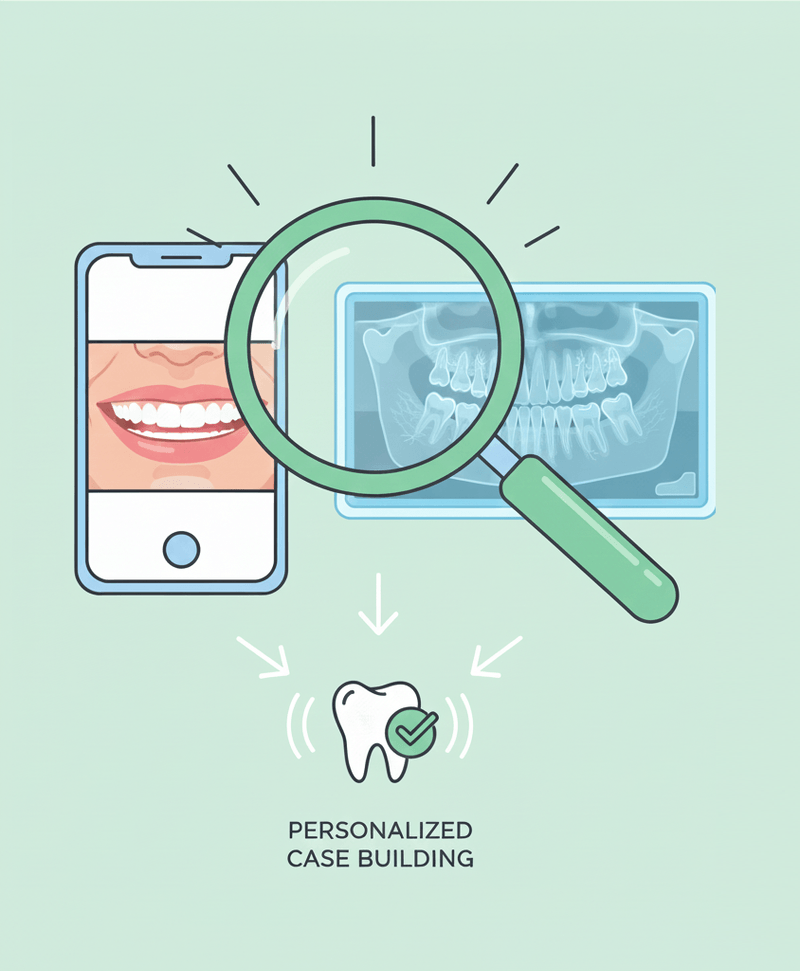
Analyses Standard Photos OR X-Rays
We review whatever images you have to build your personalized case.
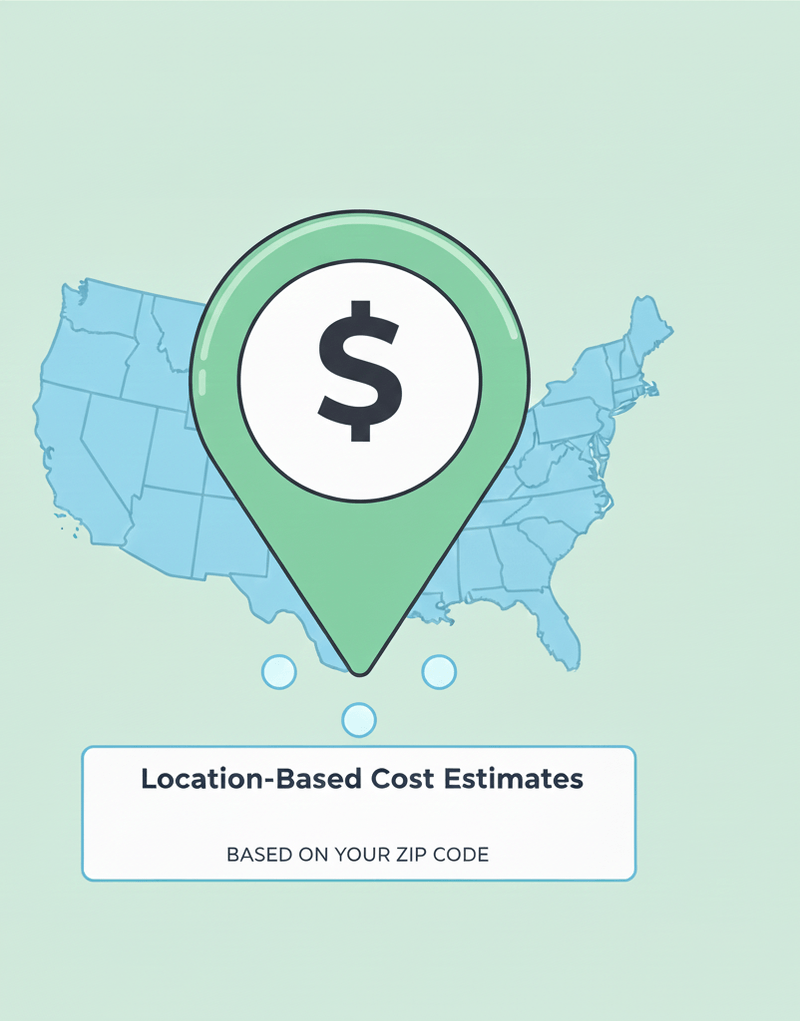
Location-Based Cost Estimates
Realistic market rate ranges based specifically on your zip code.
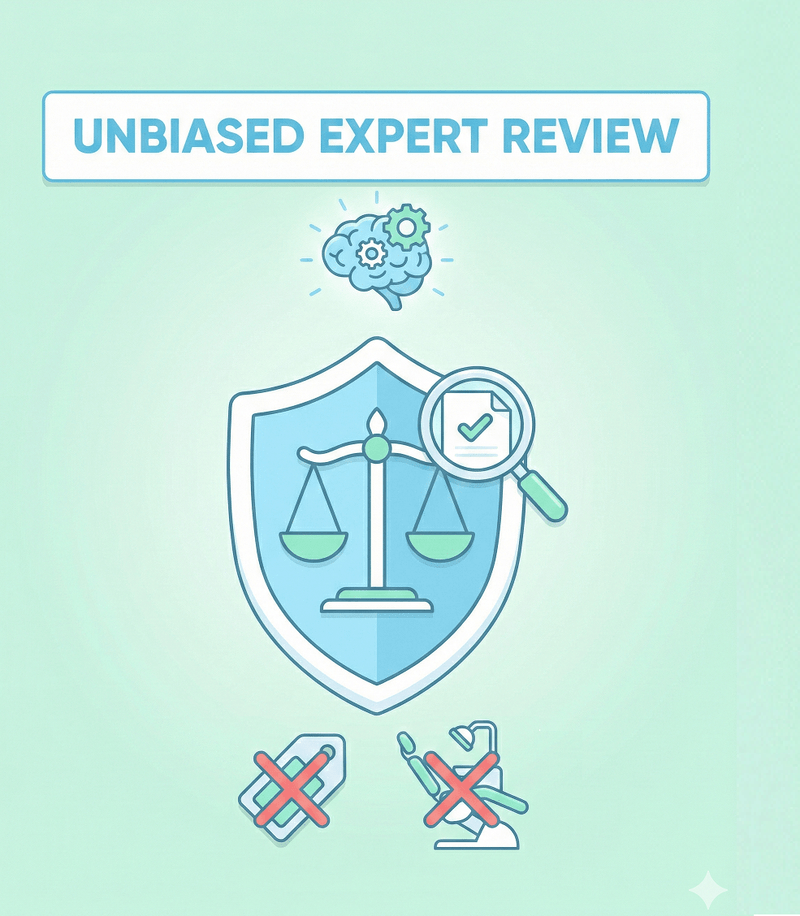
Unbiased Expert Review
100% independent assessment. We aren't dentists trying to sell you a procedure.

Alternatives, Abroad Options & Insider Saving Tips
A roadmap of choices, global price comparisons, and tricks to save thousands.
Instant implant cost estimates
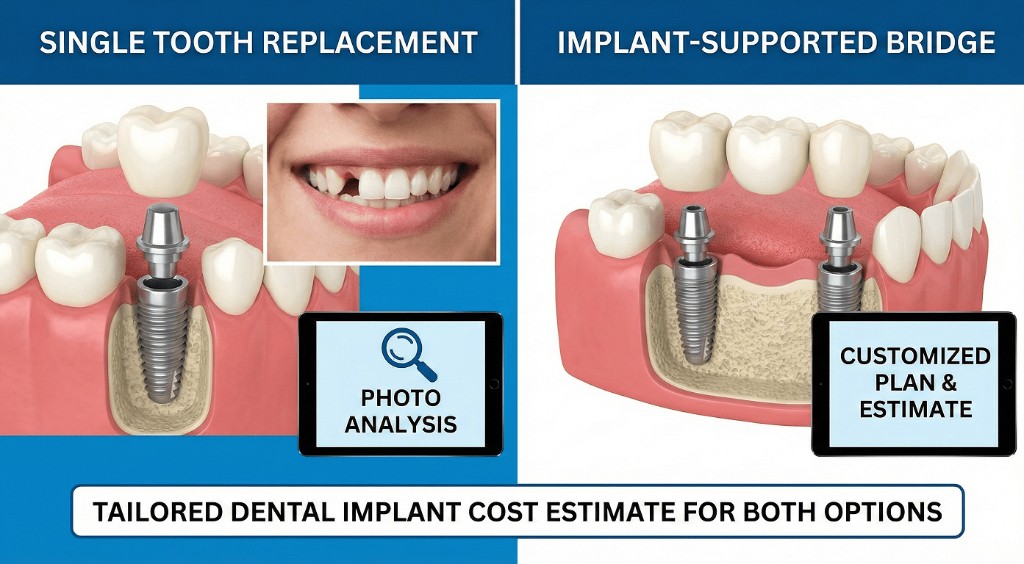
Single Tooth Replacement & Implant-Supported Bridges
Perfect for single gaps or small missing sections. We analyze your photos to determine the precise size and location needed for individual implants or a custom-designed fixed implant bridge, giving you a tailored dental implant cost estimate for both options.
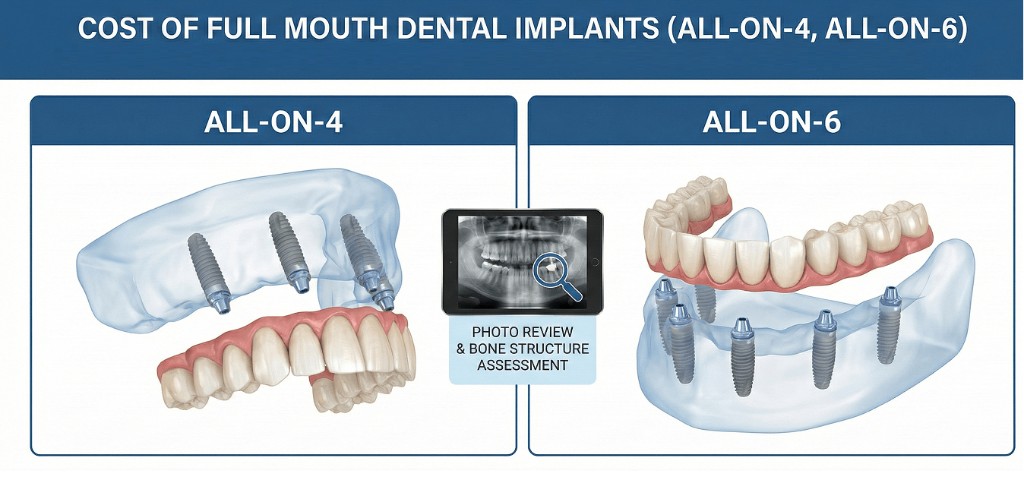
Cost of Full Mouth Dental Implants (All-on-4, All-on-6)
We specialize in assessing complex cases like All-on-4, All-on-6, and other fixed full-arch bridges. Your photo review helps determine the optimal number of implants and the right type of fixed restoration for your bone structure.
See What Your Report Looks Like
Upload a photo like this one — then explore every page of your personalised report.
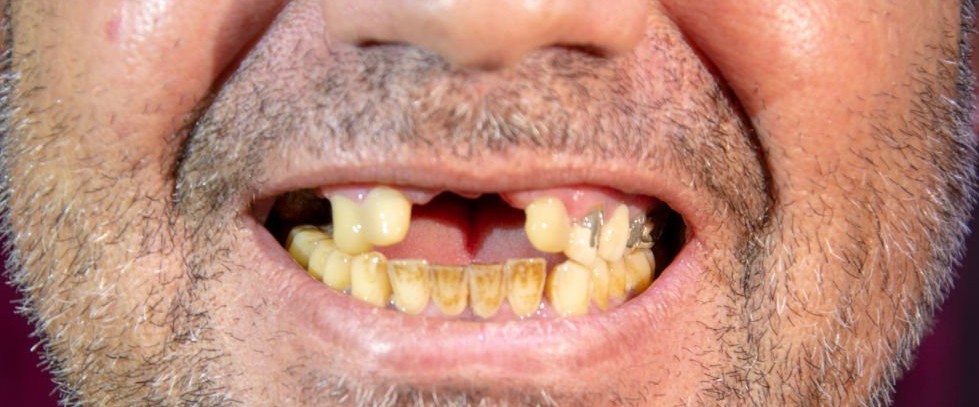
Step 2 — We generate your personalised multi-page report
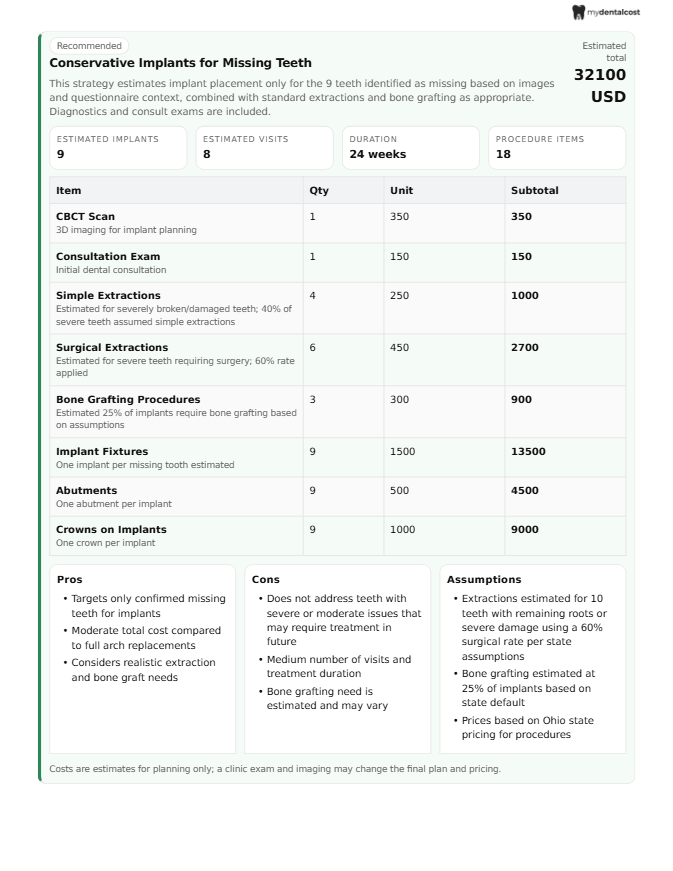
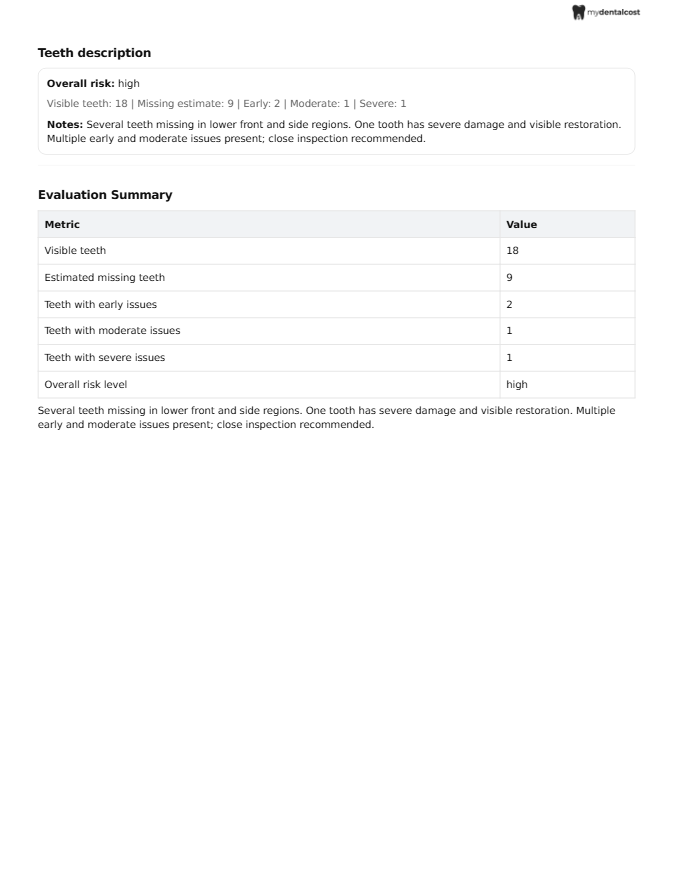
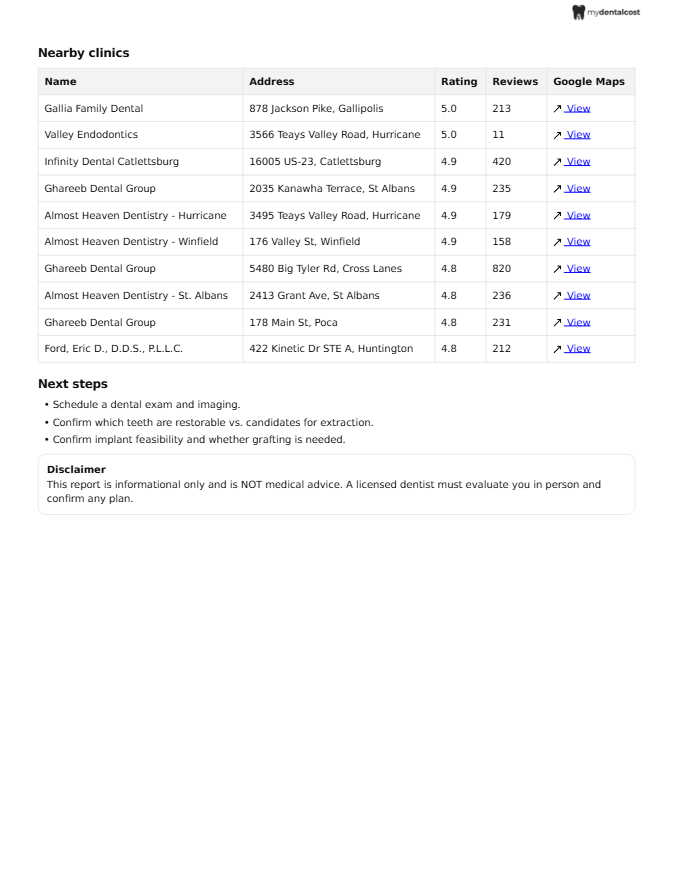
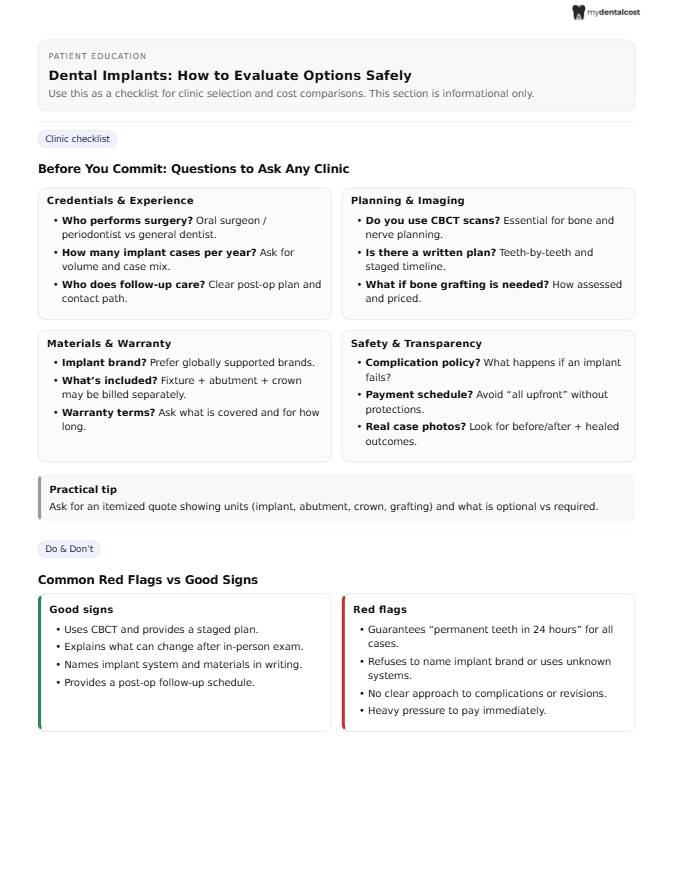
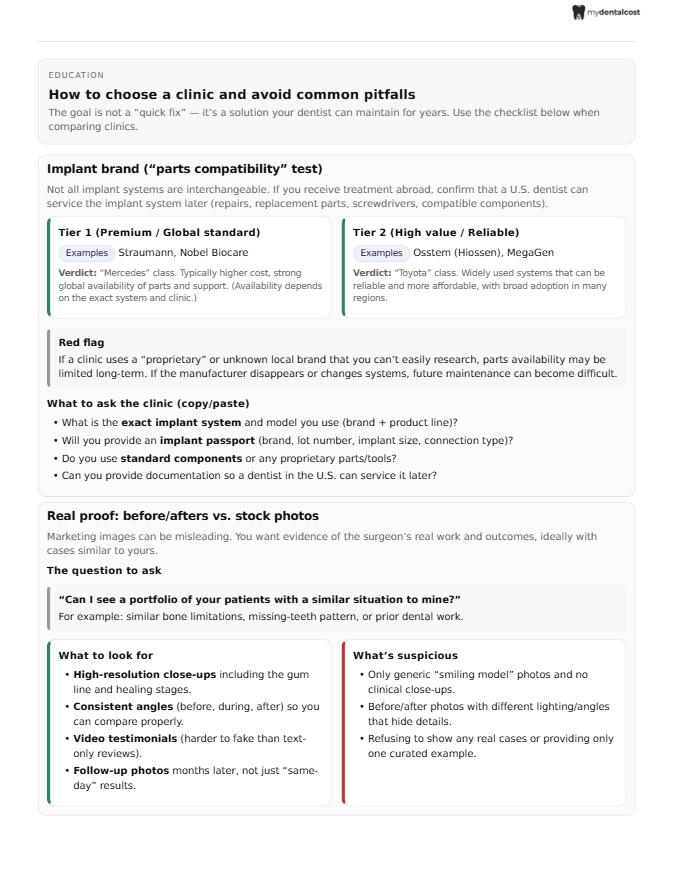
↑ Hover any page to zoom in and read the full content
Tap any page to read it in full
Everything you need to walk into any clinic fully prepared
A 14-page written PDF delivered to your inbox in 2–4 hours — yours to reference at every stage of your treatment journey.
Your real cost range
Itemised estimate by your ZIP code — implants, extractions, bone grafting, abutments and crowns. No vague ranges, no surprises.
3 treatment strategies compared
Conservative, extended and All-on-4 options with full cost breakdowns, pros, cons and duration — so you can match your budget and goals.
Analysis of your own photos
Your photos are carefully reviewed to assess missing and damaged teeth, so your report reflects your actual situation — not a one-size-fits-all estimate.
Top-rated local clinics
A curated list of highly-rated dentists near your ZIP code with Google ratings, review counts and direct Maps links so you can book with confidence.
Clinic vetting checklist
Exact questions to ask, red flags to watch for, and what a good answer looks like — before you commit to any treatment plan or deposit.
Dental tourism price guide
Real cost ranges for Mexico, Turkey, Hungary, Colombia and more — with watch-outs and a checklist to protect yourself if you consider going abroad.
Plain-English education
Implant brand tiers explained (Tier 1 vs Tier 2), healing timeline, glossary of dental terms — everything to make you an informed patient, not a passive one.
A written PDF you keep forever
Delivered to your inbox in 2–4 hours. Reference it at every stage — first consult, second opinion, abroad quote, or final decision.
Real Patients. Real Savings.
See what people discovered after getting their personalised dental implant cost report.
"Finally understood my options"
I recently purchased the Dental Implants Cost Report, and honestly, I'm glad I did. I uploaded my dental X-ray expecting something generic, but the breakdown I received was surprisingly accurate and tailored to my situation. The tool identified the exact teeth I was missing and gave me several implant options — from single-tooth implants to more budget-friendly alternatives I didn't even know existed. What I appreciated most was how clear and easy the information was. Instead of feeling overwhelmed, I finally understood the differences in implant types, materials, and procedures. It also provided estimated price ranges both locally and abroad.
Margaret T.
Columbus, OH
"Perfect for All-on-4 / All-on-6 research"
The report analyzed my upper and lower arches and gave me clear options for both All-on-4 and All-on-6 treatments. What I liked most was how everything was explained in simple terms — including what's actually included in the price, what usually costs extra, and how long each option typically lasts. The report also gave me a few money-saving tips, like checking whether my bone density allows for All-on-4 instead of All-on-6, and comparing zirconia vs. acrylic bridges. Genuinely one of the most useful things I bought during my research.
David K.
Phoenix, AZ
"Saved me weeks of research"
I'm on a tight budget, so I bought the Dental Implant Cost Report after uploading a quick photo from my phone. It gave me clear, affordable options and even showed where I could save money abroad without losing quality. The tips were super practical — like choosing certified implant systems, checking for warranties, and asking for itemized quotes to avoid hidden fees. It honestly saved me at least a week of research. If you want implants without overspending, this report is a great starting point.
Rachel M.
Austin, TX
"Went into my consultation fully prepared"
I used this report before my first consultation and it made a huge difference. I knew exactly what questions to ask, what a fair price looked like in my area, and which red flags to watch out for. My dentist was actually impressed that I understood the difference between the implant fixture, abutment, and crown — and what each should cost separately. The nearby clinic list was spot-on too. I ended up choosing a provider that was 20% cheaper than the first quote I received, with better reviews.
James R.
Denver, CO
"Worth every penny — and then some"
I was quoted $14,000 locally and had no idea if that was fair. After getting my report I discovered the same procedure in a neighboring state was nearly half the price at an equally rated clinic. The cost breakdown was incredibly detailed — it listed every line item, from the CBCT scan to the crown, with realistic price ranges for my zip code. It also flagged that my bone structure might allow for a more affordable option that my local dentist never even mentioned. This small investment genuinely saved me thousands.
Susan L.
Miami, FL
"Finally understood my options"
I recently purchased the Dental Implants Cost Report, and honestly, I'm glad I did. I uploaded my dental X-ray expecting something generic, but the breakdown I received was surprisingly accurate and tailored to my situation. The tool identified the exact teeth I was missing and gave me several implant options — from single-tooth implants to more budget-friendly alternatives I didn't even know existed. What I appreciated most was how clear and easy the information was. Instead of feeling overwhelmed, I finally understood the differences in implant types, materials, and procedures. It also provided estimated price ranges both locally and abroad.
Margaret T.
Columbus, OH
"Perfect for All-on-4 / All-on-6 research"
The report analyzed my upper and lower arches and gave me clear options for both All-on-4 and All-on-6 treatments. What I liked most was how everything was explained in simple terms — including what's actually included in the price, what usually costs extra, and how long each option typically lasts. The report also gave me a few money-saving tips, like checking whether my bone density allows for All-on-4 instead of All-on-6, and comparing zirconia vs. acrylic bridges. Genuinely one of the most useful things I bought during my research.
David K.
Phoenix, AZ
"Saved me weeks of research"
I'm on a tight budget, so I bought the Dental Implant Cost Report after uploading a quick photo from my phone. It gave me clear, affordable options and even showed where I could save money abroad without losing quality. The tips were super practical — like choosing certified implant systems, checking for warranties, and asking for itemized quotes to avoid hidden fees. It honestly saved me at least a week of research. If you want implants without overspending, this report is a great starting point.
Rachel M.
Austin, TX
"Went into my consultation fully prepared"
I used this report before my first consultation and it made a huge difference. I knew exactly what questions to ask, what a fair price looked like in my area, and which red flags to watch out for. My dentist was actually impressed that I understood the difference between the implant fixture, abutment, and crown — and what each should cost separately. The nearby clinic list was spot-on too. I ended up choosing a provider that was 20% cheaper than the first quote I received, with better reviews.
James R.
Denver, CO
"Worth every penny — and then some"
I was quoted $14,000 locally and had no idea if that was fair. After getting my report I discovered the same procedure in a neighboring state was nearly half the price at an equally rated clinic. The cost breakdown was incredibly detailed — it listed every line item, from the CBCT scan to the crown, with realistic price ranges for my zip code. It also flagged that my bone structure might allow for a more affordable option that my local dentist never even mentioned. This small investment genuinely saved me thousands.
Susan L.
Miami, FL
FAQ
Answers for your dental implants estimate
Clear, transparent information about our analysis process — what photos you need, how pricing is determined, and what to expect after you submit.
01 How are costs calculated?
Your detailed report starts with a comprehensive review of your current mouth and teeth to identify missing tooth areas and assess overall condition. From there, we determine the most suitable fixed implant options for your situation — whether that's a Single Implant, an Implant Bridge, or a Full Arch solution like All-on-4 or All-on-6.
We then deliver location-based cost estimates with realistic price ranges calibrated to your zip code, a curated list of top-performing clinics nearby, and global alternatives with insider saving tips — including price comparisons in high-value destinations like Mexico and Europe — so you can save thousands while still securing quality results.
02 What photos do I need to provide?
We need one clear, close-up photo of your upper arch and one of your lower arch, taken straight-on so every tooth — and every missing tooth space — is clearly visible.
If you have recent X-rays (Panoramic or CBCT scans), those work even better and can be uploaded in place of photos.
The upload process walks you through exactly how to position your phone to capture both images correctly. It's fast, easy, and requires no special equipment — just decent lighting and a steady hand.
03 Is my data secure and private?
Absolutely. Your photos and personal information are handled with strict confidentiality. They are used exclusively to generate your personalised cost report and are never shared with third parties, sold, or used for marketing purposes. We apply industry-standard encryption in transit and at rest to keep your data protected at every step.
04 When will I receive my estimate?
Your personalised dental implant cost estimate is delivered within a few hours of submitting your photos and details. We take this time to complete a thorough, case-specific analysis — not a generic template — so the report you receive is as accurate and actionable as possible. You'll be notified by email the moment it's ready.
Still have a question? Contact us →